Why Are Sloths So Slow? An Unusual Survival Strategy in the Wild
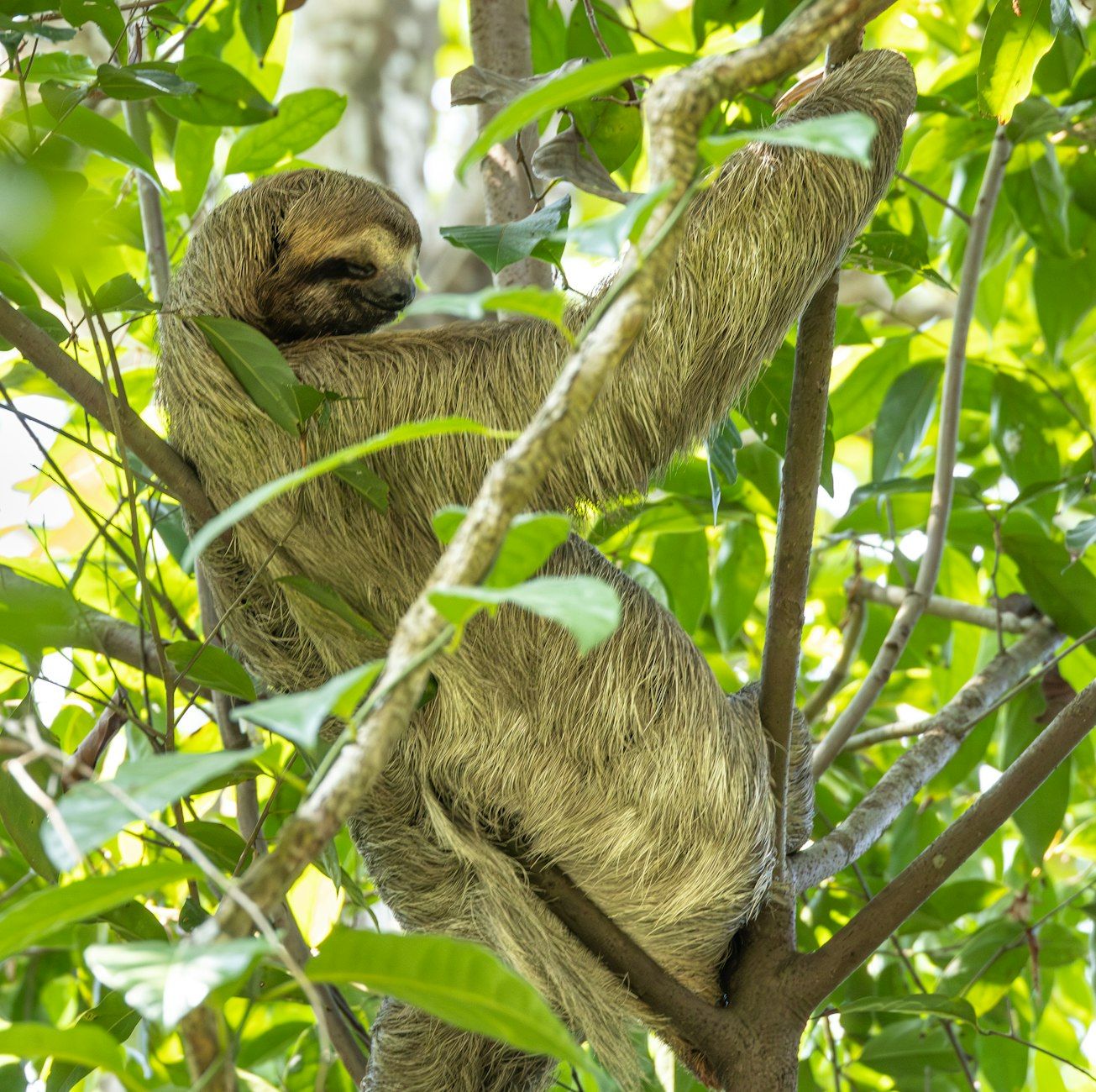
Sloths are famous for moving at a pace that seems almost impossibly relaxed. They may take minutes to travel a short distance through the canopy, and even their famous swimming is generally a calm, deliberate affair. But slowness is not simply a quirk or a sign of laziness. It is part of a finely balanced way of life shaped by the foods sloths eat, the energy they can obtain, and the forests they call home. To understand why are sloths so slow, it helps to look at the whole system: their diet, digestion, bodies, behaviour, and evolutionary history.
A Low-Energy Diet Sets the Pace
Most sloths feed mainly on leaves, although the exact menu varies by species and habitat. Leaves are abundant in tropical forests, but they are not especially rich in easily accessible energy. They can also contain tough fibres and chemical compounds that make them difficult to digest. A sloth therefore gets relatively little usable energy from each mouthful compared with an animal that eats fruit, insects, or meat.
Sloths make the most of this limited food supply with a slow, specialised digestive system. Food can remain in the stomach for a long time as microbes help break down plant material. This process allows sloths to extract nutrients gradually, but it is not a quick way to fuel intense activity. Their bodies are adapted to conserve energy rather than spend it on rapid movement, frequent travel, or a high-powered lifestyle.
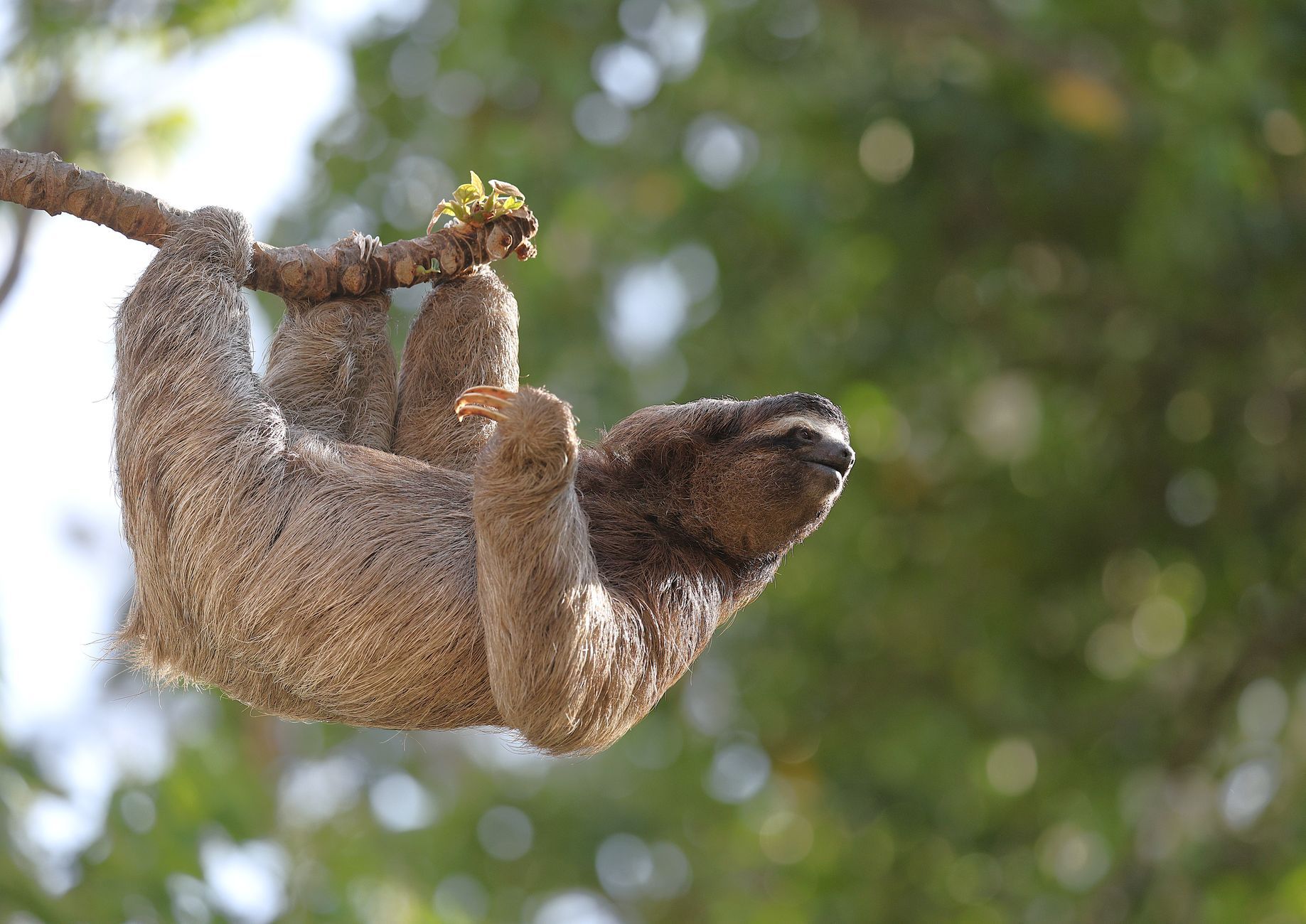
This is the heart of the sloth metabolism. Sloths generally have a low metabolic rate for their size, meaning their bodies use energy slowly. They also tend to have less muscle mass than animals built for speed or sustained exertion. Their long limbs and curved claws are excellent for hanging and gripping branches, but they are not designed for fast running on the ground. Moving slowly helps keep daily energy needs within what a leafy diet can provide.
Slowness as a Survival Strategy
The sloth survival strategy is not based on outrunning danger. Instead, it combines energy conservation with spending much of life high in the trees. Sloths can move carefully among branches, often gripping the same tree limbs for long periods. Their slow, steady movements may make them less noticeable to predators than sudden, energetic activity would. In a rainforest where many animals rely on sight to detect movement, staying still can be valuable—but it does not make sloths invisible or immune to attack.
Sloths do have predators, including large cats and powerful birds of prey. Their protection comes from a mix of behaviours and physical traits. Their fur can host algae, giving some individuals a greenish tint that may help them blend into leafy surroundings. Their long claws help them cling firmly to branches, and their ability to remain motionless for extended periods can make them harder to spot. These advantages work best as part of a broader strategy, not as a guarantee of safety.
Sloth behaviour also reflects the risks of moving. A sloth that travels less often can conserve energy and spend less time exposed. However, sloths still move when they need to find food, reach a new area, or reproduce. They are not incapable of faster movement: when threatened or in water, they can move more quickly than their usual pace suggests. Their normal slowness is a routine energy-saving choice, not an absolute inability to act.
Built for Life in the Canopy
Many sloth adaptations make sense when viewed in the context of an arboreal life. Their long limbs and hooked claws allow them to hang beneath branches, where they can feed and rest without needing to balance upright on narrow limbs. Their bodies are suited to moving upside down through the canopy, a position that would be tiring or awkward for many other mammals. This slow, suspended movement is efficient for an animal that spends much of its time in trees.
Sloths also conserve energy by keeping their activity modest and their body temperature relatively flexible. Unlike animals that maintain a very stable internal temperature at high energetic cost, sloths can allow their body temperature to shift with conditions. They may seek sun or shade to help manage warmth, and their temperature can vary more than it does in many similarly sized mammals. This approach can reduce energy demands, though it also means that temperature and weather may affect how active a sloth can be.
Their fur is another distinctive feature. In some sloths, the hair grows in a direction that helps water drain when the animal hangs upside down. The coat can support algae and small organisms, creating a tiny ecosystem that may contribute to camouflage. The relationship between sloths and the organisms living in their fur is complex, and researchers continue to study how these associations benefit the animals. In any case, the shaggy coat is more than a visual trademark: it is part of a body adapted to a humid, leafy environment.
Why the Ground Is Different
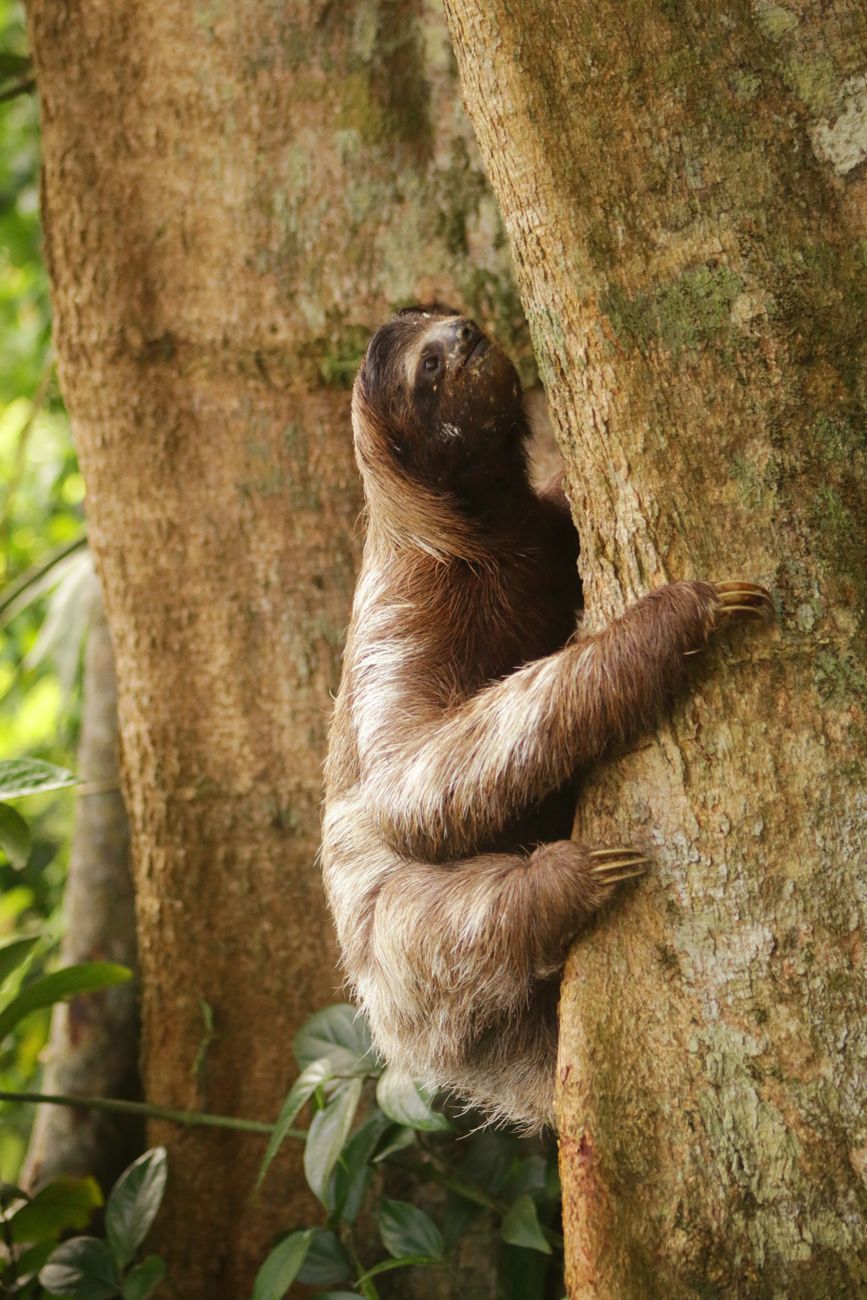
Sloths are far more comfortable in trees than on the ground. On land, their long claws and specialised limbs make crawling slow and awkward. A ground crossing may expose them to danger, so they generally avoid unnecessary trips. Still, sloths do sometimes descend from trees, including to defecate. This behaviour may seem risky, and scientists have proposed several explanations for it, including possible links to moths and algae that live in sloth fur. The exact benefits are still debated, and not every detail of the behaviour is fully understood.
Sloths can also swim. Their long limbs allow them to paddle through water, and swimming may provide a useful way to cross rivers or flooded areas. This ability is a reminder that slowness is context-dependent. A sloth that looks clumsy on the ground can be a capable swimmer, while in the treetops its claws and body shape give it a more natural kind of mobility.
Sloth Habitat and the Rainforest
The sloth habitat includes tropical forests in Central and South America. Different species occupy different regions and forest types, and their needs depend on access to suitable trees, food, and connected canopy. A forest with a continuous canopy allows sloths to travel without making frequent, dangerous descents to the ground. When forests are cleared or broken into isolated patches, reaching food and mates can become more difficult.
As rainforest animals, sloths are connected to the health of their forest in several ways. They depend on trees for food and shelter, while their fur hosts small organisms and their movements link them to the wider canopy ecosystem. Because they reproduce slowly and are adapted to particular forest conditions, habitat loss can be especially challenging. Protecting tropical forest is therefore important not only for sloths but also for the many species that share their environment.
Sloth Evolution and Two Different Lifestyles
Sloth evolution has produced a group of mammals with a strikingly different approach to survival. Modern sloths are usually divided into two-toed and three-toed types, names based on the number of claws on their front limbs. These groups are not identical in their diets, habits, or evolutionary histories. Some are more specialised in the leaves they eat, and individual species may differ in how they use the forest canopy. The familiar image of one uniform “sloth lifestyle” simplifies a diverse group.
Sloths belong to a much larger evolutionary story that includes extinct ground sloths, some of which were enormous and lived very differently from the small tree-dwelling species alive today. Modern sloths are not simply tiny versions of those extinct animals. Over time, their lineages developed body forms and habits suited to life in trees, where gripping, climbing, and conserving energy became more useful than speed on open ground.
Are Sloths the Slowest Animals in the World?
Sloths are often described as the slowest animals in the world, but that phrase is best understood as a popular comparison rather than a precise scientific ranking. Speed depends on what is being measured: movement over land, climbing, swimming, or activity over a longer period. Sloths are exceptionally slow-moving mammals, especially when travelling through the canopy, but their pace can change with the situation. Their reputation captures something real—their unusually low-energy style—without describing every movement they make.
Their slowness is not a flaw that evolution has failed to correct. It is a workable solution to a difficult balance: eating low-energy food while avoiding unnecessary energy use and living in a forest full of potential threats. Slow movement, long digestion, specialised limbs, and careful use of the canopy all support one another. The result is an animal that thrives by doing less, moving deliberately, and making every burst of effort count.
A Different Measure of Success
Sloths remind us that survival does not always belong to the fastest or strongest animal. In their world, energy conservation can be as important as speed. Their slow pace fits their sloth diet, their digestive system, and their tree-dwelling habits. It also shows how sloth adaptations can shape behaviour in unexpected ways. Rather than racing through the rainforest, sloths succeed by remaining patient, gripping securely, and using a specialised body that turns a modest supply of food into a sustainable life in the canopy.