Why Time Slows Down: How the Theory of Relativity Works in Real Life


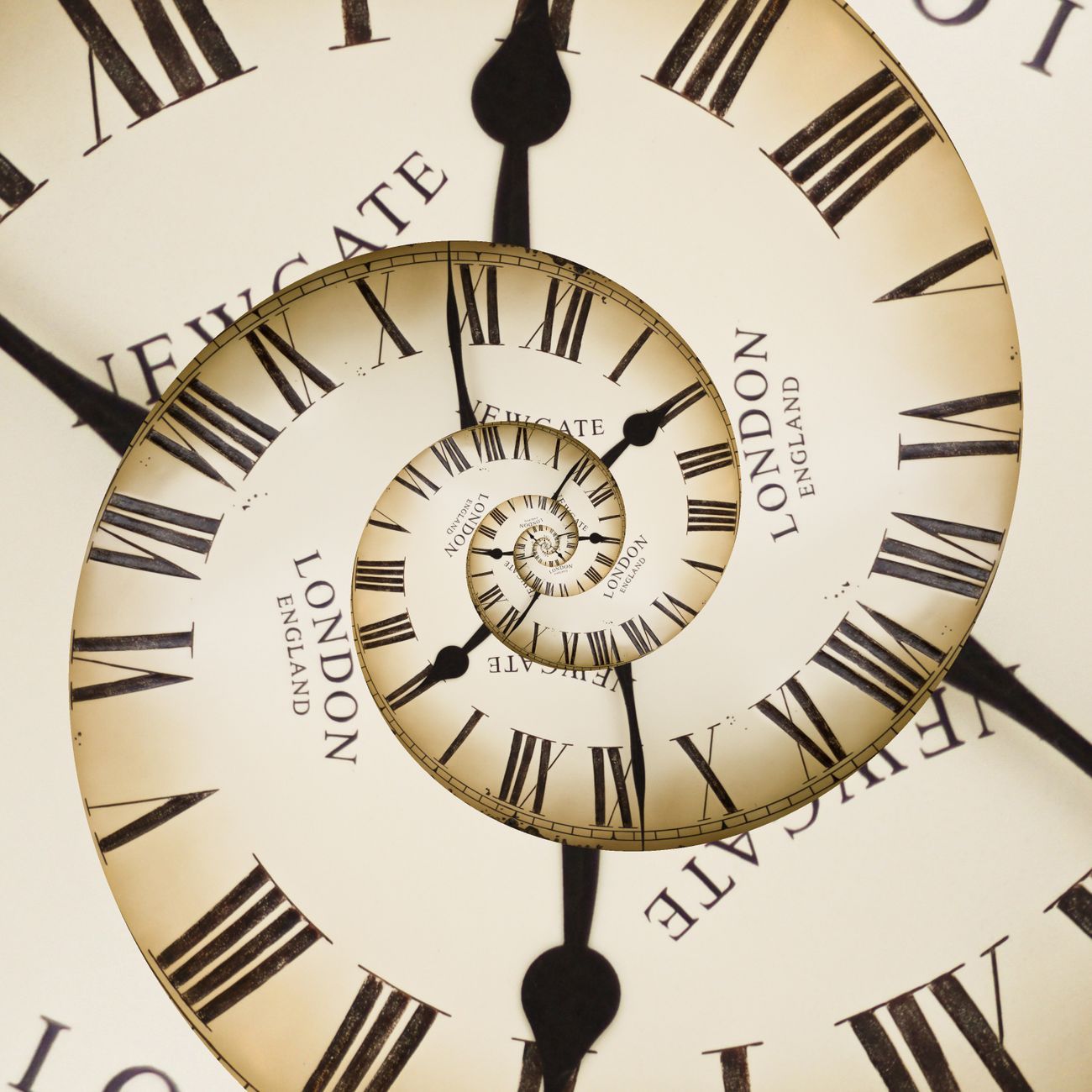
Have you ever wondered why time seems to pass differently in different situations? The concept of time dilation, a fundamental aspect of Einstein's theory of relativity, explains this phenomenon. Both special relativity and general relativity play a crucial role in understanding how time behaves in the presence of high speeds and strong gravitational fields.
Special Relativity:
Special relativity, proposed by Albert Einstein in 1905, introduced the idea that time is not absolute but instead relative to an observer's frame of reference. One of the key principles of special relativity is that the speed of light in a vacuum is constant for all observers, regardless of their relative motion. This means that time can appear to slow down or speed up depending on the relative velocity between two observers.
General Relativity:
General relativity, developed by Einstein in 1915, expanded on the concepts of special relativity by incorporating gravity into the framework of spacetime. According to general relativity, massive objects like planets and stars curve the fabric of spacetime, causing it to bend around them. This curvature of spacetime influences how objects move through space and time, leading to phenomena like gravitational time dilation.
Speed of Light and Time Dilation:
One of the most fascinating consequences of Einstein's relativity is the concept of time dilation, where time appears to pass more slowly for an observer in motion relative to another observer at rest. This effect becomes more pronounced as the speed of the moving observer approaches the speed of light. As a result, astronauts travelling at high speeds experience time passing more slowly compared to people on Earth.
Gravity and Time:
Gravity also has a significant impact on the flow of time, as predicted by general relativity. In areas of strong gravitational fields, such as near massive celestial bodies, time runs slower than in regions with weaker gravitational fields. This gravitational time dilation has practical implications, such as affecting the accuracy of clocks on GPS satellites orbiting the Earth.
Space-Time and Relativistic Effects:
The concept of space-time, a unified framework that combines the three dimensions of space with the dimension of time, is central to understanding how relativistic effects manifest in the universe. Events that occur in different locations and times can be interconnected through the fabric of space-time, leading to phenomena like time loops and the stretching or contraction of time intervals.
Practical Applications:
The principles of Einstein's theory of relativity have been confirmed through numerous experiments and observations, demonstrating their validity in describing the behaviour of the universe at both macroscopic and microscopic scales. From the functioning of GPS systems to the behaviour of particles in particle accelerators, the effects of relativity play a crucial role in modern science and technology.
In conclusion, the theory of relativity offers a profound insight into the nature of time and its relationship with space, motion, and gravity. By understanding how time dilation occurs in different contexts, we can appreciate the intricate ways in which the fabric of the universe governs the passage of time. Einstein's revolutionary ideas continue to shape our understanding of the cosmos and inspire further exploration into the mysteries of spacetime.