Cream or powder blush: which works better on dry winter skin
By January, the blush that looked fresh in September can start to sit on your cheeks like dust, catching every rough patch and fading to a flat smudge by lunch. On dry winter skin, cream blush usually looks better and stays more even, because its oils and waxes blend into the skin's surface instead of resting on top of flakes.
Powder blush still works best over oily areas, on top of a powder-set base and in humid weather. The better choice depends on how dry your cheeks get and what else you wear on your face.
Why powder clings to dry patches in winter
Cold outdoor air holds little moisture, and indoor heating dries the air further, so the outer layer of skin loses water faster than usual. The result is a surface of tiny raised flakes and fine texture that looks smooth from a distance but shows up under makeup.
Powder blush is pigment pressed with fillers such as talc or mica. When you sweep it across the cheek, those dry particles grab whatever texture they meet, so flakes collect more colour than the smooth skin around them. Powder can also soak up some of the moisture and oil on the surface, which leaves already dry skin looking even flatter.
Cream blush works the other way. Its emollients soften the look of texture and let the colour melt into the skin, so it reads as a flush from within. It can't fix flaking on its own, though: gentle exfoliation and a daily moisturiser help any blush look smoother.
Cream and powder side by side on dry skin
The two formulas differ less in colour than in how they behave on the skin and with the products around them.
| Cream blush | Powder blush | |
|---|---|---|
| On dry, flaky patches | Blends in and softens texture | Tends to cling and look chalky |
| Typical finish | Dewy to satin | Matte, satin or shimmer |
| Blending | Work quickly before it sets | Builds slowly in sheer layers |
| Over oily areas | Can slide or fade | Usually holds better |
| Layering | Over moisturiser or a liquid base, before any powder | Over powder or after setting |
| Usual tools | Fingers, a dense synthetic brush, a damp sponge | A soft, fluffy brush |
| Hygiene | Touched directly, so clean tools matter more | Drier formula, but brushes still need regular washing |
The layering row matters most for daily wear. Creams blend over other creams and liquids; laid over set powder, they drag and lift what's underneath, leaving patches. Powders are the reverse: they sit happily over powder but can turn blotchy on a base that's still damp.
Satin powders with a soft, fine sheen usually look better on dry skin than very matte ones, while coarse glitter can highlight texture. If you love powder, a finely finished satin shade is a good first switch to try before giving it up.
Getting cream blush to last through a cold day
Apply moisturiser and give it a few minutes to sink in before any makeup. Colour laid on a slick, freshly moisturised cheek tends to slip and fade faster.
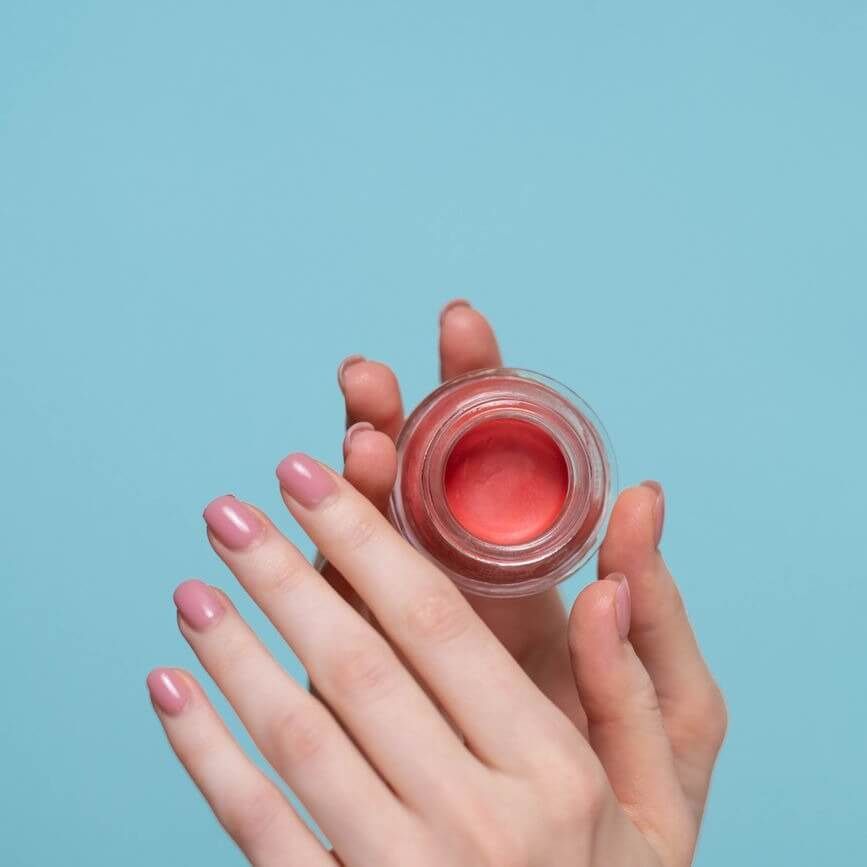
A blusher stick in cream form is the simplest version for dry skin. Dab two or three dots on the upper cheek rather than dragging the stick across, then tap and blend outward with your fingertips; body warmth softens the formula and presses it into the skin. Wipe the top of the stick with a tissue now and then, since it touches your face every time.
If you'd rather keep your fingers clean, a blusher brush with dense, synthetic bristles is the better tool. Synthetic fibres don't soak up oils the way natural hair does, so they move the product around instead of absorbing it, and they rinse clean more easily. Use a stippling or patting motion; long sweeping strokes can push the foundation underneath out of place.
Start with less than you think you need. Cream builds fast, and taking colour off without disturbing the base is harder than adding a second layer.
For long days outside, lock the cream in with a very light veil of matching powder blush or a translucent powder pressed on with a puff. That combination keeps the dewy look underneath while giving the colour something to grip.
Keeping powder blush from looking chalky
If your favourite shade only comes as a powder, you can still make it work on dry cheeks. Use a hydrating primer or a moisturising base, and skip heavy setting powder on the cheeks themselves, since every layer of powder adds to the dry, flat effect.
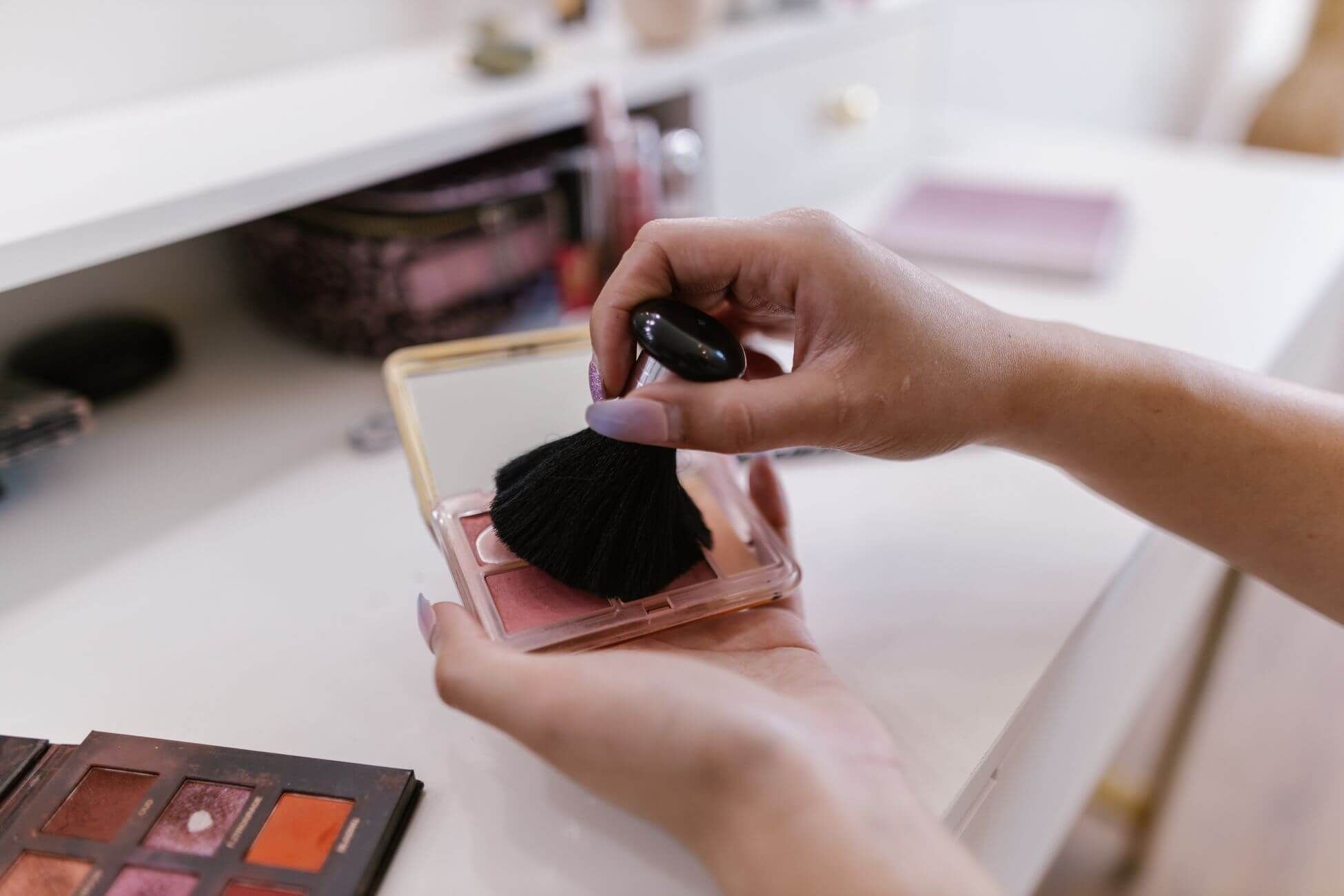
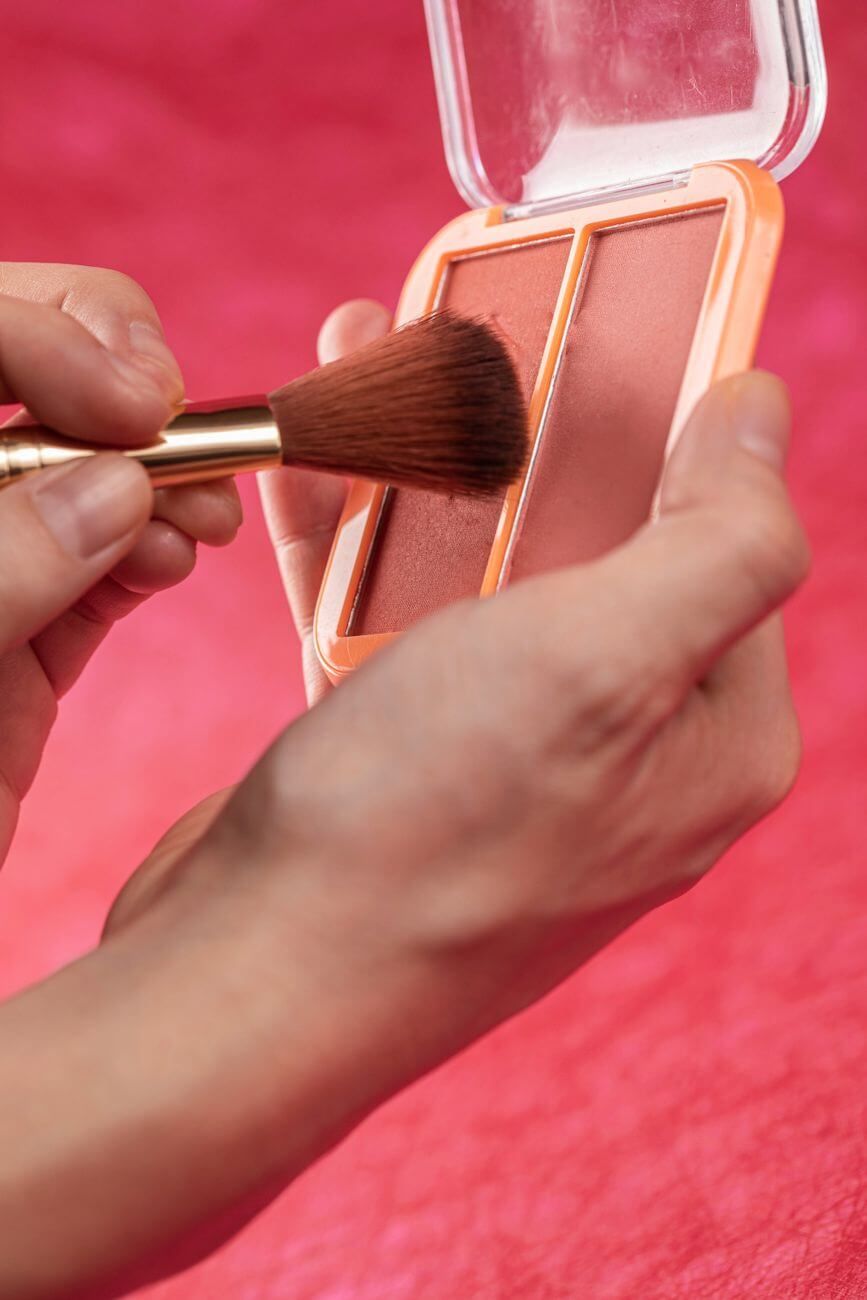
The brush makes a real difference. A soft, loose powder blusher brush picks up less pigment and deposits it in a haze, while a dense, stiff brush presses colour into dry patches. Tap off the excess before it touches your face, then sweep in light passes and build up.
A mist of setting or hydrating spray after you finish helps the powder settle into the skin and takes away much of the dusty look. Hold the bottle at arm's length so the spray lands evenly rather than in wet spots.
Powder also suits combination skin where the cheeks get oily by midday, and it remains the easier option once humid spring weather returns.
Which formula suits your skin and routine
The right pick depends less on the blush itself than on the rest of your routine.
- Very dry or flaky cheeks: cream, applied over a well-absorbed moisturiser; a stick is the easiest to control.
- Bare skin or tinted moisturiser only: cream, blended with fingers, gives the most natural result with the least effort.
- Full-coverage foundation set with powder: powder blush with a fluffy brush, or a cream applied before you set the face.
- Combination skin with an oily T-zone: cream on the cheeks if they stay dry, with powder kept for the centre of the face.
- Fine lines that show more under matte products: cream or a satin powder, applied sparingly.
- Long days without a chance to touch up: a thin cream layer topped with a sheer dusting of powder.
Whichever you choose, replace a cream blush promptly once it smells off or changes texture. If the package shows a small open-jar symbol, the number of months beside it is the maker's suggested use period after opening, but many products sold in the US don't carry it.