Conquer Paper Clutter: A Simple Desktop Filing System to Organize Your Documents

Are you tired of drowning in a sea of paper clutter every time you sit down at your desk? Do you find yourself spending valuable time and energy frantically searching for an important contract, an unpaid bill, or a tiny receipt amidst a chaotic mountain of loose sheets? If so, you are not alone.
Paper clutter is one of the biggest sources of visual noise and mental distraction in modern workspaces. It doesn't just look messy; it directly impairs your focus, triggers micro-stress, and derails your productivity. Fortunately, you don't need a massive commercial filing cabinet to fix this. Implementing a simple, highly visual desktop filing system can completely tame the madness, restore calm, and help you reclaim your workspace.
The Silent Cost of Loose Papers
Many people treat their desktop as a giant, open-air inbox. Letters, project notes, and invoices are dropped flat on the surface with the intention of "dealing with them later." Within a week, these flat papers form stratified layers, burying old tasks and creating an intimidating backlog.
To break this cycle, you must shift from horizontal piling to vertical filing. This instantly clears your desk real estate, puts everything at eye level, and creates a streamlined workflow.
1. The Core Setup: Choosing the Right Desk Document Organizer
The foundation of a clutter-free desk is a functional desk document organizer. When shopping for office supplies, look for pieces that balance utility with a minimalist aesthetic.
-
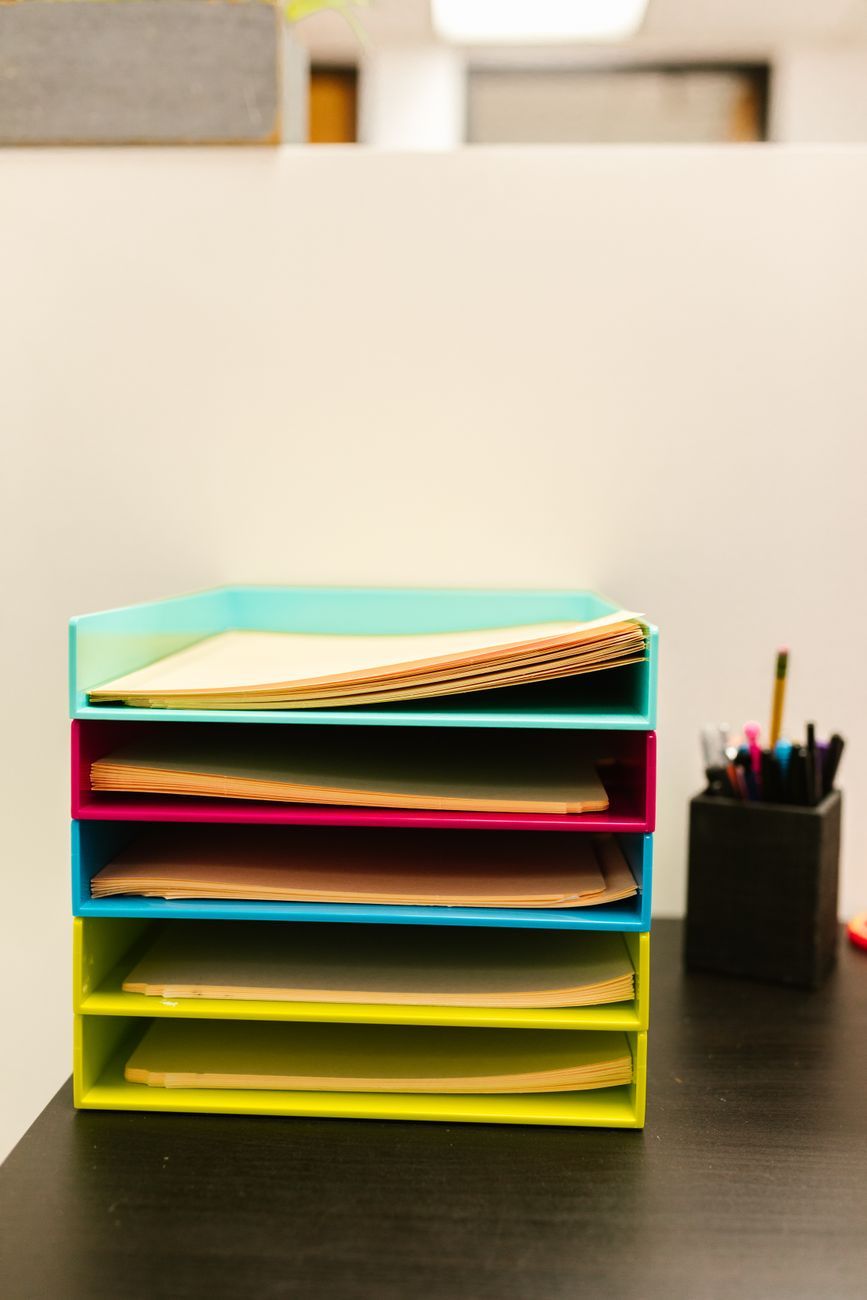
Vertical vs. Horizontal: Vertical file slots are incredible for active documents you need to grab quickly, while horizontal desktop paper trays are perfect for separating incoming mail or processing daily workflows.
-
Material Matters: Choose sturdy materials like coated wire mesh, natural bamboo, or sleek matte plastics that complement your home office decor. When your storage looks intentional and premium, you are much more likely to respect the system and keep using it.
2. The 3-Step "Desktop Diet" Filing System
If you don't know how to organize loose papers, the easiest way to start is by adopting the "Rule of Three." Instead of creating dozens of hyper-specific categories that require too much mental effort to maintain, divide your desktop organizer into just three distinct zones:
-
Zone 1: The Inbox (Action Required). This is where every piece of loose paper lands the moment it enters your office. Unopened mail, new bills, prints that need a signature, or scribbled project notes go here. Nothing stays here forever; it is simply a temporary holding zone.
-
Zone 2: In Progress (Pending Tasks). This section holds documents for active projects you are working on this week. It keeps critical information right at your fingertips without letting it scatter across your desk surface.
-
Zone 3: The Archive (To File Away). This folder is for completed documents that you need to keep for tax, legal, or reference purposes, but don't need to look at daily. Once a week, you empty this tray and move the contents to long-term storage binders or a digital scanner.
3. Practical Office Organization Hacks to Maintain Momentum
Setting up the system is easy; keeping it going is the real challenge. Incorporate these simple paper decluttering tips into your routine to ensure your desk stays pristine:
The 2-Minute Rule: If a piece of paper requires an action that takes less than two minutes (like throwing away junk mail, signing a permission slip, or checking a quick stat), do it immediately. Don't let it touch your desk.
Go Minimalist with Paper Storage: Be ruthless about what you keep. Ask yourself: "Can I find this information online in less than 30 seconds?" If the answer is yes (like utility bills, bank statements, or software manuals), shred it or recycle it.
Label Everything: Use an affordable label maker or neat sticky notes to clearly mark your desktop paper trays. When your trays say "BILLS" or "RECEIPTS" in plain sight, your brain automatically categorizes the paper without stalling.
4. The Power of the End-of-Day Ritual
The ultimate secret to sustaining an organized workspace is consistency. Make it a non-negotiable habit to set aside just three to five minutes at the end of each workday to clear your desk surface.
Take all the loose papers that accumulated throughout the day, run them through your 3-step system, discard the trash, and leave your workspace completely blank for the next morning. Walking into a clean, well-ordered office tomorrow will boost your morning energy, eliminate decision fatigue, and set you up for a highly focused, stress-free, and productive workday. Say goodbye to the chaos and hello to a streamlined professional life!